
MOTS-c for dogs and cats: evidence and key questions
MOTS-c explained for pet owners: exact identity, primary evidence, dog and cat relevance, product context, and questions for your veterinarian.
Direct answer: MOTS-c research on metabolic signaling is not the same as evidence that a product restores energy or improves longevity in a dog or cat. The important distinction is between a mechanism, an experimental animal outcome, and a clinical pet outcome.
Does mitochondrial research show an energy benefit for pets?
Lee and colleagues described MOTS-c as a 16-amino-acid peptide encoded within a mitochondrial region. Its research identity should remain separate from the broad phrase mitochondrial support and from unrelated compounds such as NAD+.

What the primary source actually establishes
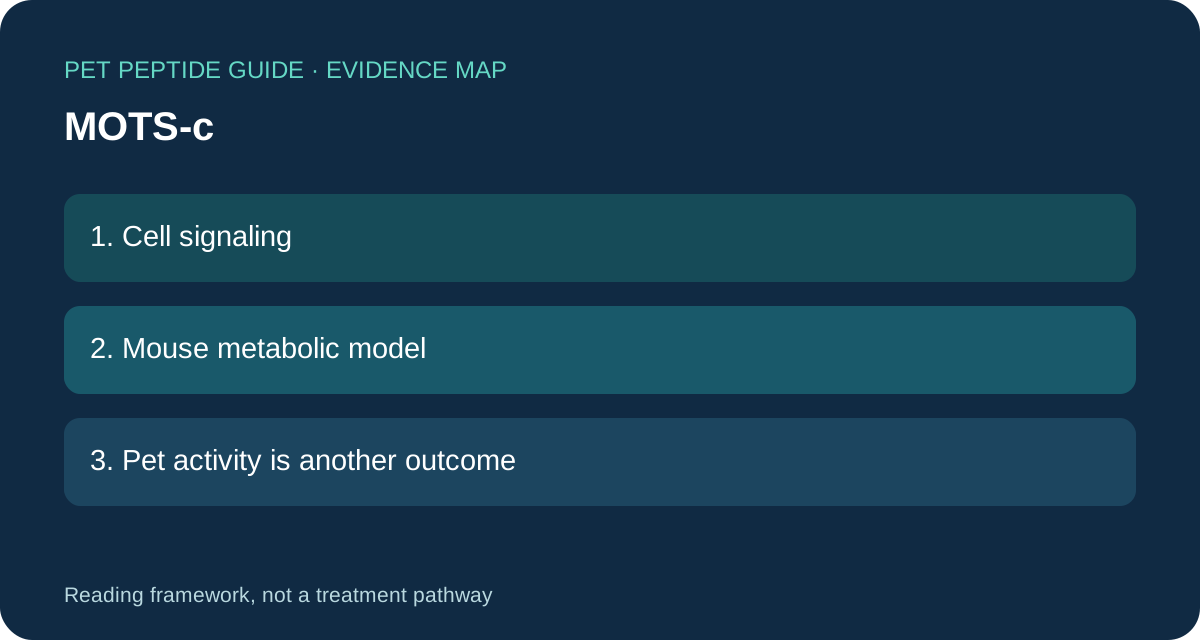
The 2015 Cell Metabolism paper examined cellular pathways and mouse metabolic models. It reported effects on insulin resistance and diet-related obesity under experimental conditions. Those findings do not establish a veterinary regimen or demonstrate benefit in client-owned dogs or cats. Read the original source.
Product identity and approval context
This review uses the primary publication’s abstract-level findings and does not reconstruct administration or formulation instructions from them. No pet clinical indication is established by this source.
How to use this evidence in a veterinary discussion
For an owner, “low energy” needs a clearer description before it becomes a treatment target. Is the observed change less willingness to play, shorter walks, altered sleep, reduced appetite, or loss of strength? Record what changed and when, including other care or feeding changes. Those observations help define a clinical question; they do not diagnose a mitochondrial problem. A proposed intervention should then be assessed against that question. A change in a cell-signaling pathway is not interchangeable with improved activity at home. Likewise, a mouse exposed to an experimental diet does not automatically model the cause of a particular cat’s weight or activity change. The useful next step is to match the explanation to the animal before comparing substances marketed under the same energy label.
What would make a future pet study more useful?
A useful study would define the pet population and clinical problem, identify the actual preparation and route, use an appropriate comparison, and measure an outcome owners and clinicians can interpret. It would also report follow-up and unwanted effects. A metabolic marker could be included, but it should not silently replace activity, function, or another relevant clinical endpoint. This is a framework for judging evidence, not a claim that such a trial has been completed.
Questions to take to your appointment
- What does reduced energy mean in this animal’s case?
- Is the evidence a pathway result or a patient outcome?
- What evidence matches this species, formulation, and concern?
Use the printable product and evidence checklist to record the exact label, the source of a claim, and the unanswered questions. Bring the animal’s current medicines and supplements so a proposed product is not assessed in isolation.
Dogs, cats, routes, and formulations: what remains unresolved?
The source set above is a focused review, not a systematic search of every publication. Evidence from a dog does not automatically answer a cat question, and evidence from a laboratory model does not establish a clinical result in a household pet. Where this review has not verified a relevant preparation, route, or patient outcome, that detail remains unresolved. It should not be filled with instructions from a seller or a human regimen.
Frequently asked questions
Does this guide recommend MOTS-c for my pet?
No. It explains the evidence question and its limits so you can discuss a specific concern with a veterinarian. A compound’s inclusion in the library is not a product recommendation, and no affiliate offer is attached to this guide.
Can I use a calculator to choose an amount?
The amount-to-volume calculator performs arithmetic using an amount already provided by a veterinarian and a confirmed concentration. It does not select a dose, frequency, route, or product. The concentration calculator likewise uses confirmed final volume; it does not supply mixing instructions.
How should I compare a related compound?
Start with the related evidence guide, then compare exact identity, species, route, and measured outcome. A shared marketing category is not evidence of equivalence. Use the main peptide guide and topic directory to navigate the full collection.
Prepared by Pet Peptide Guide using the sources identified here, checked September 12, 2026. This is AI-assisted editorial research, not veterinary review, product testing, or a clinical protocol. Missing evidence is described as a limit of this review, not proof that no research exists.
Sources and scope
This is an introductory guide or original comparison framework, not a systematic review or a product recommendation.
- MOTS-c: primary research or official product context — Supports the specific source discussion above; does not imply pet suitability.
Source checked September 12, 2026. A general context source does not establish a named product’s benefit.