
CJC-1295 with and without DAC for dogs and cats: evidence and key questions
CJC-1295 with and without DAC explained for pet owners: exact identity, primary evidence, dog and cat relevance, product context, and questions for your veterinarian.
Direct answer: CJC-1295 with DAC and products described as CJC-1295 without DAC should not be treated as interchangeable. A long-lasting hormonal response reported for a DAC preparation does not establish the duration, effects, or pet suitability of a no-DAC preparation.
Why must DAC and no-DAC evidence stay separate?
FDA’s December 2024 compounding briefing distinguishes CJC-1295 free base from CJC-1295 DAC free base. The DAC form includes an added chemical group associated with albumin binding. Read the exact form in the methods, not only the shortened name in a headline.

What the primary source actually establishes
Teichman and colleagues’ 2006 randomized, placebo-controlled studies examined subcutaneous CJC-1295 in healthy adults. The measured outcomes included growth hormone and IGF-I responses and duration of exposure. This is human hormonal-response evidence for the investigated long-acting preparation, not a clinical recovery or longevity study in pets. Read the original source.
Product identity and approval context
Identity source: FDA CJC-1295 briefing, December 2024. A compounding advisory review is not itself product approval. This guide does not establish an animal indication for either form.
How to use this evidence in a veterinary discussion
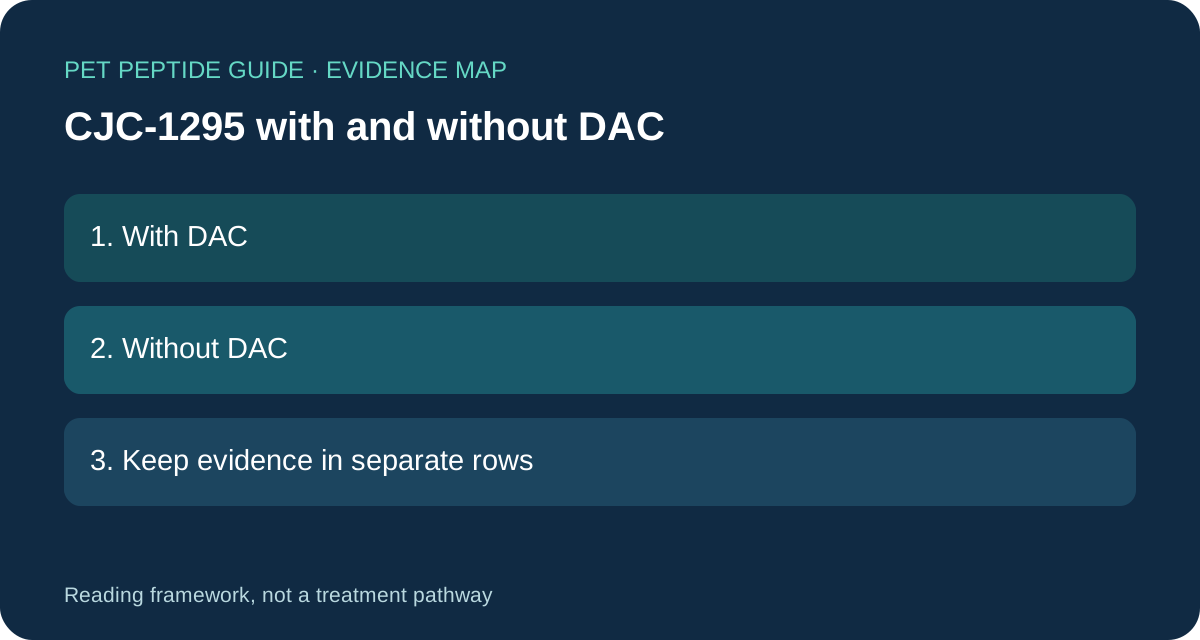
Use two separate rows in your notes: with DAC and without DAC. In each row record the exact preparation, study population, route, measured endpoint, and what remains unknown. Leave a blank where the evidence concerns the other form. This prevents the common mistake of borrowing duration from one molecule and a marketing claim from another. Adding ipamorelin is a third comparison, not a shortcut that merges the first two. If a seller cites growth hormone or IGF-I changes, ask why that laboratory outcome would predict a meaningful improvement in the animal’s diagnosed condition. A hormonal change is something to interpret, not a self-explanatory score for health. A useful consultation concerns a defined problem and a monitoring plan, not selection of the longest-lasting acronym.
How should a DAC versus no-DAC comparison be organized?
Keep the forms as separate entries even when a source uses the shortened CJC name. Compare identity first, then exposure duration, then any measured outcomes. Leave an empty cell when a study concerns only one form. Do the same for mixtures: evidence for an ingredient is not a direct comparison of a finished combination. This avoids building a seemingly complete product profile from studies that tested different materials.
Questions to take to your appointment
- Which CJC-1295 form is actually identified?
- Does the cited study match that form and route?
- What pet outcome is supported beyond a hormone measurement?
Use the printable product and evidence checklist to record the exact label, the source of a claim, and the unanswered questions. Bring the animal’s current medicines and supplements so a proposed product is not assessed in isolation.
Dogs, cats, routes, and formulations: what remains unresolved?
The source set above is a focused review, not a systematic search of every publication. Evidence from a dog does not automatically answer a cat question, and evidence from a laboratory model does not establish a clinical result in a household pet. Where this review has not verified a relevant preparation, route, or patient outcome, that detail remains unresolved. It should not be filled with instructions from a seller or a human regimen.
Frequently asked questions
Does this guide recommend CJC-1295 with and without DAC for my pet?
No. It explains the evidence question and its limits so you can discuss a specific concern with a veterinarian. A compound’s inclusion in the library is not a product recommendation, and no affiliate offer is attached to this guide.
Can I use a calculator to choose an amount?
The amount-to-volume calculator performs arithmetic using an amount already provided by a veterinarian and a confirmed concentration. It does not select a dose, frequency, route, or product. The concentration calculator likewise uses confirmed final volume; it does not supply mixing instructions.
How should I compare a related compound?
Start with the related evidence guide, then compare exact identity, species, route, and measured outcome. A shared marketing category is not evidence of equivalence. Use the main peptide guide and topic directory to navigate the full collection.
Prepared by Pet Peptide Guide using the sources identified here, checked September 12, 2026. This is AI-assisted editorial research, not veterinary review, product testing, or a clinical protocol. Missing evidence is described as a limit of this review, not proof that no research exists.
Sources and scope
This is an introductory guide or original comparison framework, not a systematic review or a product recommendation.
- CJC-1295 with and without DAC: primary research or official product context — Supports the specific source discussion above; does not imply pet suitability.
- CJC-1295 with and without DAC: primary research or official product context — Supports the specific source discussion above; does not imply pet suitability.
Source checked September 12, 2026. A general context source does not establish a named product’s benefit.