
GHK-Cu for dogs and cats: evidence and key questions
GHK-Cu explained for pet owners: exact identity, primary evidence, dog and cat relevance, product context, and questions for your veterinarian.
Direct answer: GHK-Cu wound research supports a focused scientific question about tissue responses. It does not automatically validate a cream, spray, or injection for a dog or cat. The preparation and wound model matter as much as the ingredient name.
Does copper-peptide wound research validate a pet skin product?
GHK-Cu is the copper complex of glycyl-histidyl-lysine. A peptide complex in an experiment is not a complete finished skin formulation, and a product containing that name may contain other ingredients that need separate assessment.

What the primary source actually establishes
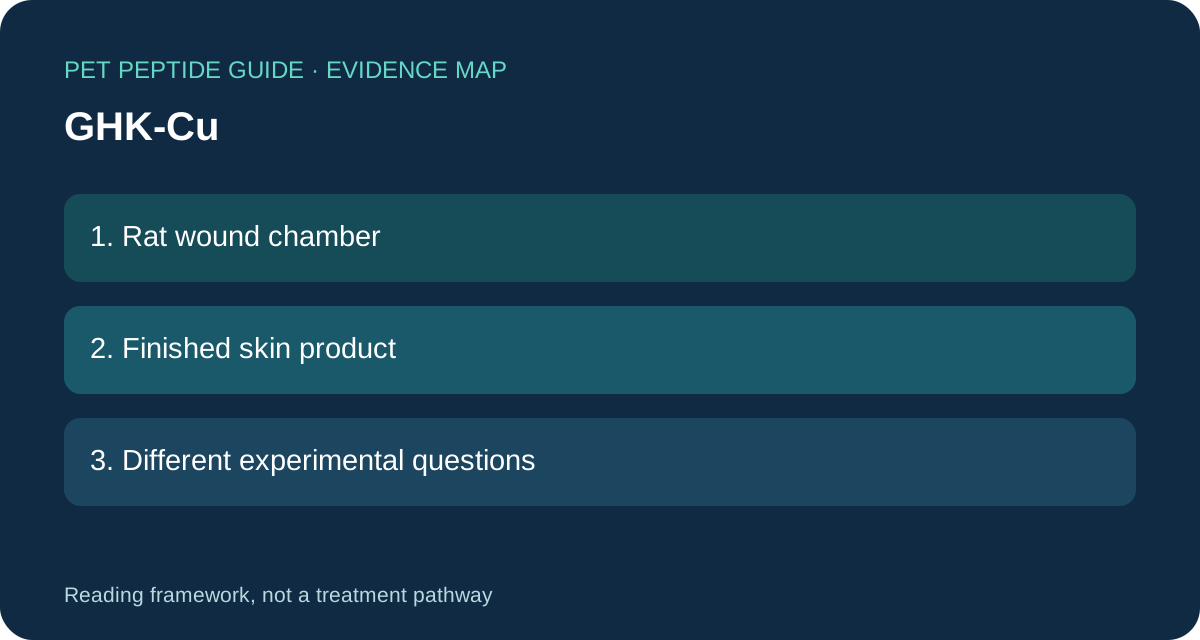
Maquart and colleagues’ 1993 study used implanted wound chambers in rats and injections into those chambers. Researchers measured accumulated tissue components, including collagen and other matrix material, and reported increases with GHK-Cu. This was not a trial of a commercial topical product on naturally occurring dog or cat wounds. Read the original source.
Product identity and approval context
The source is experimental rat wound research, not a veterinary product label. This guide does not establish an approved pet use or an evidence-based preparation protocol.
How to use this evidence in a veterinary discussion
An owner comparing a skin claim should ask whether the outcome was tissue chemistry, wound closure, pain, infection, or recurrence. These outcomes are different, and a paper can answer one without answering the others. A cream used on intact skin also poses a different question from material placed into an experimental wound chamber. Bring the complete ingredient list to the veterinary discussion, including the base and preservatives, rather than only the highlighted copper peptide. For cats, ask specifically how grooming affects assessment of a topical product; do not assume a human cosmetic’s directions account for that exposure. Photographs can help document changes over time, but changing lighting, wound care, and concurrent treatment can make informal before-and-after comparisons misleading.
Why is more collagen not the same as a complete wound-care result?
A tissue measurement can illuminate part of a repair process without answering whether a clinical wound closes appropriately, remains comfortable, or avoids complications. To evaluate a product claim, look for the outcome that matches the claim. If the source measured material accumulated in a chamber, report that result as such. A finished skin product also requires its own formulation assessment; a highlighted ingredient is only one part of what contacts the animal.
Questions to take to your appointment
- Does the evidence test the same route and finished formulation?
- Which wound outcome matters for this animal?
- How should application-site access and grooming be considered?
Use the printable product and evidence checklist to record the exact label, the source of a claim, and the unanswered questions. Bring the animal’s current medicines and supplements so a proposed product is not assessed in isolation.
Dogs, cats, routes, and formulations: what remains unresolved?
The source set above is a focused review, not a systematic search of every publication. Evidence from a dog does not automatically answer a cat question, and evidence from a laboratory model does not establish a clinical result in a household pet. Where this review has not verified a relevant preparation, route, or patient outcome, that detail remains unresolved. It should not be filled with instructions from a seller or a human regimen.
Frequently asked questions
Does this guide recommend GHK-Cu for my pet?
No. It explains the evidence question and its limits so you can discuss a specific concern with a veterinarian. A compound’s inclusion in the library is not a product recommendation, and no affiliate offer is attached to this guide.
Can I use a calculator to choose an amount?
The amount-to-volume calculator performs arithmetic using an amount already provided by a veterinarian and a confirmed concentration. It does not select a dose, frequency, route, or product. The concentration calculator likewise uses confirmed final volume; it does not supply mixing instructions.
How should I compare a related compound?
Start with the related evidence guide, then compare exact identity, species, route, and measured outcome. A shared marketing category is not evidence of equivalence. Use the main peptide guide and topic directory to navigate the full collection.
Prepared by Pet Peptide Guide using the sources identified here, checked September 12, 2026. This is AI-assisted editorial research, not veterinary review, product testing, or a clinical protocol. Missing evidence is described as a limit of this review, not proof that no research exists.
Sources and scope
This is an introductory guide or original comparison framework, not a systematic review or a product recommendation.
- GHK-Cu: primary research or official product context — Supports the specific source discussion above; does not imply pet suitability.
Source checked September 12, 2026. A general context source does not establish a named product’s benefit.