
TB-500 for dogs and cats: evidence and key questions
TB-500 explained for pet owners: exact identity, primary evidence, dog and cat relevance, product context, and questions for your veterinarian.
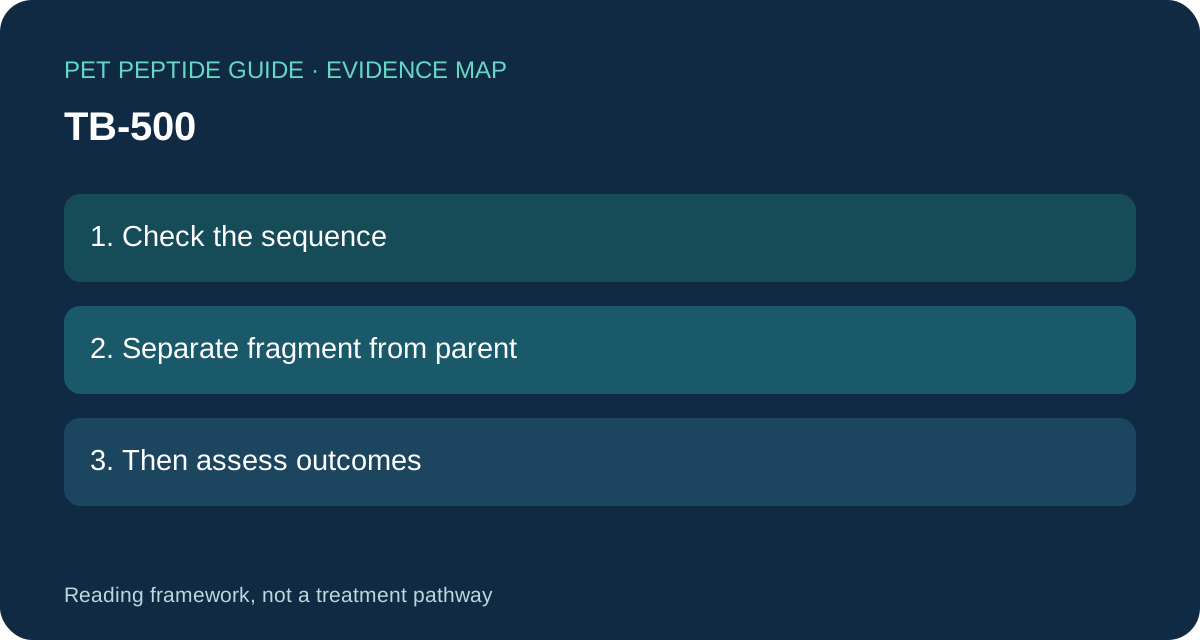
Direct answer: The name TB-500 is not enough to transfer a thymosin beta-4 study to a product. Resolve the exact peptide sequence and modification first. A fragment and a full-length peptide must remain separate in a repair or recovery claim.
Is TB-500 the same as thymosin beta-4?
The FDA substance registry entry examined here identifies TB-500 as the N-terminally acetylated LKKTETQ fragment corresponding to residues 17–23 of thymosin beta-4. This is an identity record, not a clinical approval or an endorsement of anything sold under that name.

What the primary source actually establishes
The FDA GSRS record provides a seven-residue sequence and its acetylation detail. It does not test wound closure, tendon recovery, angiogenesis, or clinical outcomes in dogs, cats, or horses. A paper about full-length thymosin beta-4 therefore needs an additional identity check before it can be used in a TB-500 discussion. Read the original source.
Product identity and approval context
No veterinary treatment conclusion is drawn from this substance record. Nor does the presence of an identifier establish that a particular vial contains the recorded substance. This page deliberately resolves nomenclature before considering a commercial benefit claim.
How to use this evidence in a veterinary discussion
When reading a recovery claim, write down the name used in the paper, sequence if reported, chemical modifications, route, and species. Then compare those details with the proposed preparation. If the paper and label only share a nickname, the comparison remains unresolved. A combination marketed with BPC-157 creates a further question: was that exact combination studied, or were separate papers assembled into a benefit list? A photograph of a vial or a laboratory certificate cannot fill that evidence gap. For a pet recovering from an injury, ask which diagnosis and functional milestones matter, rather than treating an increase in a biological repair signal as proof of better recovery. The research question should stay attached to the exact molecule throughout the discussion.
What should an identity comparison actually contain?
Start with the paper’s full compound name and sequence, then note whether a terminal modification is specified. Record the parent peptide separately. Add the formulation and route only when the paper identifies them. If a product description uses TB-500 without those details, mark the match unresolved. A certificate for identity or purity, even when genuine, would answer a material-characterization question; it would not establish a healing outcome in the intended species.
Questions to take to your appointment
- What exact sequence and modification does this name refer to?
- Does the cited paper study this fragment or full-length thymosin beta-4?
- Was the exact combination and route studied in the relevant animal?
Use the printable product and evidence checklist to record the exact label, the source of a claim, and the unanswered questions. Bring the animal’s current medicines and supplements so a proposed product is not assessed in isolation.
Dogs, cats, routes, and formulations: what remains unresolved?
The source set above is a focused review, not a systematic search of every publication. Evidence from a dog does not automatically answer a cat question, and evidence from a laboratory model does not establish a clinical result in a household pet. Where this review has not verified a relevant preparation, route, or patient outcome, that detail remains unresolved. It should not be filled with instructions from a seller or a human regimen.
Frequently asked questions
Does this guide recommend TB-500 for my pet?
No. It explains the evidence question and its limits so you can discuss a specific concern with a veterinarian. A compound’s inclusion in the library is not a product recommendation, and no affiliate offer is attached to this guide.
Can I use a calculator to choose an amount?
The amount-to-volume calculator performs arithmetic using an amount already provided by a veterinarian and a confirmed concentration. It does not select a dose, frequency, route, or product. The concentration calculator likewise uses confirmed final volume; it does not supply mixing instructions.
How should I compare a related compound?
Start with the related evidence guide, then compare exact identity, species, route, and measured outcome. A shared marketing category is not evidence of equivalence. Use the main peptide guide and topic directory to navigate the full collection.
Prepared by Pet Peptide Guide using the sources identified here, checked September 12, 2026. This is AI-assisted editorial research, not veterinary review, product testing, or a clinical protocol. Missing evidence is described as a limit of this review, not proof that no research exists.
Sources and scope
This is an introductory guide or original comparison framework, not a systematic review or a product recommendation.
- TB-500: primary research or official product context — Supports the specific source discussion above; does not imply pet suitability.
Source checked September 12, 2026. A general context source does not establish a named product’s benefit.