
GHRP-2 for dogs and cats: evidence and key questions
GHRP-2 explained for pet owners: exact identity, primary evidence, dog and cat relevance, product context, and questions for your veterinarian.
Direct answer: GHRP-2 has dog research on food intake and gastrointestinal activity, but an experimental response is not the same as an established treatment for a pet that is eating poorly. Appetite and coordinated digestive function are separate outcomes.
Does a dog appetite experiment establish an appetite treatment?
GHRP-2 is a specific growth hormone-releasing peptide. The number identifies the compound; it should not be replaced with GHRP-6 in a source summary or a product comparison.

What the primary source actually establishes
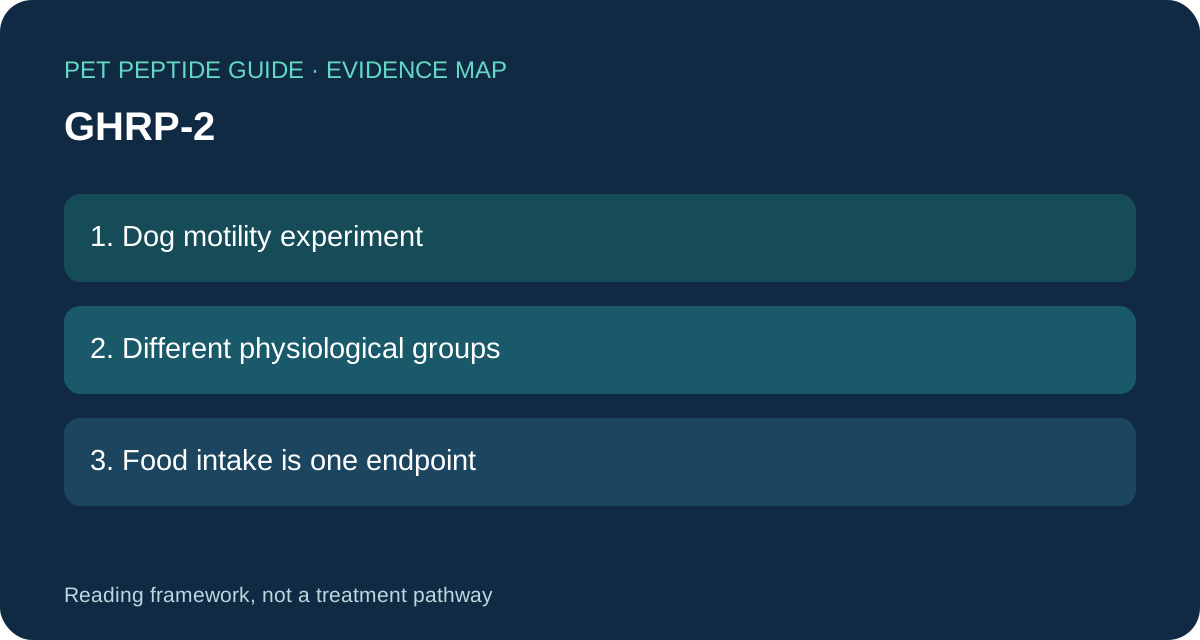
Kudoh and colleagues’ 2009 study compared neurally intact dogs with dogs that had undergone vagotomy and pyloroplasty. It used intravenous GHRP-2 and measured gastrointestinal motility and food intake. Responses differed by experimental group, showing why the physiological setting belongs in the interpretation. Read the original source.
Product identity and approval context
The study concerns experimental physiology, including surgically altered animals. It is not a clinical trial establishing a routine appetite product for dogs or cats, and this guide does not extrapolate its regimen.
How to use this evidence in a veterinary discussion
For an owner, reduced eating is an observation to describe and investigate, not a diagnosis supplied by an appetite peptide list. Record what the animal is offered, what is actually eaten, and accompanying changes. Ask what the clinical evaluation is trying to determine before comparing interventions. If a paper reports increased food intake, examine whether it also assessed the problem relevant to the animal. A short change in consumption does not by itself establish nutritional recovery or long-term benefit. This study is particularly useful as a reminder that experimental conditions can change a response. Keep the intact and surgically altered groups separate rather than averaging the story into “works in dogs.”
Why keep the surgically altered study group visible?
The alteration was part of the experimental question. Omitting it makes the research sound like a simpler trial in ordinary clinical patients. A useful summary names the groups and the outcome without asking the reader to assume that all dogs responded alike. For a pet-care decision, ask whether the experimental setting helps explain the actual condition or whether it mainly provides background physiological insight.
Questions to take to your appointment
- What explains the change in eating for this animal?
- Does the source concern ordinary clinical patients or an experimental model?
- Were sustained nutrition and clinical outcomes measured?
Use the printable product and evidence checklist to record the exact label, the source of a claim, and the unanswered questions. Bring the animal’s current medicines and supplements so a proposed product is not assessed in isolation.
Dogs, cats, routes, and formulations: what remains unresolved?
The source set above is a focused review, not a systematic search of every publication. Evidence from a dog does not automatically answer a cat question, and evidence from a laboratory model does not establish a clinical result in a household pet. Where this review has not verified a relevant preparation, route, or patient outcome, that detail remains unresolved. It should not be filled with instructions from a seller or a human regimen.
Frequently asked questions
Does this guide recommend GHRP-2 for my pet?
No. It explains the evidence question and its limits so you can discuss a specific concern with a veterinarian. A compound’s inclusion in the library is not a product recommendation, and no affiliate offer is attached to this guide.
Can I use a calculator to choose an amount?
The amount-to-volume calculator performs arithmetic using an amount already provided by a veterinarian and a confirmed concentration. It does not select a dose, frequency, route, or product. The concentration calculator likewise uses confirmed final volume; it does not supply mixing instructions.
How should I compare a related compound?
Start with the related evidence guide, then compare exact identity, species, route, and measured outcome. A shared marketing category is not evidence of equivalence. Use the main peptide guide and topic directory to navigate the full collection.
Prepared by Pet Peptide Guide using the sources identified here, checked September 12, 2026. This is AI-assisted editorial research, not veterinary review, product testing, or a clinical protocol. Missing evidence is described as a limit of this review, not proof that no research exists.
Sources and scope
This is an introductory guide or original comparison framework, not a systematic review or a product recommendation.
- GHRP-2: primary research or official product context — Supports the specific source discussion above; does not imply pet suitability.
Source checked September 12, 2026. A general context source does not establish a named product’s benefit.