
SS-31 / elamipretide for dogs and cats: evidence and key questions
SS-31 / elamipretide explained for pet owners: exact identity, primary evidence, dog and cat relevance, product context, and questions for your veterinarian.
Direct answer: Elamipretide has experimental dog heart-failure research and a specific human drug approval context. These are meaningful but different evidence streams. Neither should be shortened to a general claim that SS-31 treats mitochondrial problems in all pets.
How do dog heart studies relate to the human drug Forzinity?
SS-31 and MTP-131 are development names associated with elamipretide. The human product Forzinity is a particular formulation, not a description of every vial sold under an earlier development name.

What the primary source actually establishes
Sabbah and colleagues’ 2016 study investigated chronic elamipretide therapy in dogs with advanced heart failure, measuring left-ventricular and mitochondrial function. This is directly relevant canine experimental research, but a disease model and its measured cardiac outcomes should not be presented as a trial of routine treatment in all client-owned dogs or cats. Read the original source.
Product identity and approval context
The September 2025 Forzinity label describes accelerated approval to improve muscle strength in human patients with Barth syndrome weighing at least 30 kg, based on an intermediate clinical endpoint. It is a subcutaneous human product label, not a canine heart-failure indication.
How to use this evidence in a veterinary discussion
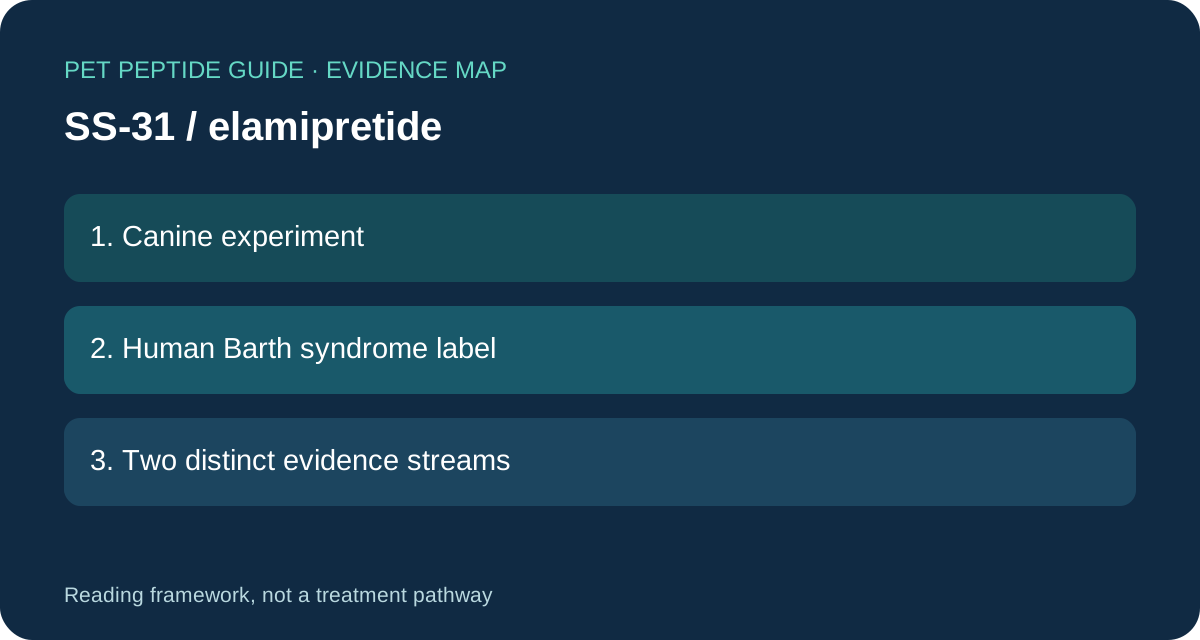
Keep two evidence cards: the dog experiment and the human approval. On the dog card, ask how the disease was modeled, what comparator was used, and whether function, survival, or symptoms were measured. On the human card, retain the named syndrome, eligible population, and approval basis. Combining the cards into “approved for heart disease” loses essential context. For a pet with a cardiac diagnosis, the relevant question is how any proposed intervention fits the existing care plan and which clinical outcome it is expected to change. An owner should not replace that discussion with a generic mitochondrial-support claim or infer product equivalence from a development code. The dog research is worth reading precisely because its details matter.
Does the human weight threshold apply to a large dog?
No. A weight criterion in a human indication remains a human eligibility criterion. A dog weighing the same amount does not become part of the approved population. Likewise, sharing a word such as mitochondrial with the human disease description does not establish the same diagnosis. The canine experimental paper and human label should each be read on their own terms before considering any veterinary relevance.
Questions to take to your appointment
- Does my animal’s diagnosis match the experimental disease model?
- Which outcome was measured and over what follow-up?
- How does the proposed preparation relate to the actual study material?
Use the printable product and evidence checklist to record the exact label, the source of a claim, and the unanswered questions. Bring the animal’s current medicines and supplements so a proposed product is not assessed in isolation.
Dogs, cats, routes, and formulations: what remains unresolved?
The source set above is a focused review, not a systematic search of every publication. Evidence from a dog does not automatically answer a cat question, and evidence from a laboratory model does not establish a clinical result in a household pet. Where this review has not verified a relevant preparation, route, or patient outcome, that detail remains unresolved. It should not be filled with instructions from a seller or a human regimen.
Frequently asked questions
Does this guide recommend SS-31 / elamipretide for my pet?
No. It explains the evidence question and its limits so you can discuss a specific concern with a veterinarian. A compound’s inclusion in the library is not a product recommendation, and no affiliate offer is attached to this guide.
Can I use a calculator to choose an amount?
The amount-to-volume calculator performs arithmetic using an amount already provided by a veterinarian and a confirmed concentration. It does not select a dose, frequency, route, or product. The concentration calculator likewise uses confirmed final volume; it does not supply mixing instructions.
How should I compare a related compound?
Start with the related evidence guide, then compare exact identity, species, route, and measured outcome. A shared marketing category is not evidence of equivalence. Use the main peptide guide and topic directory to navigate the full collection.
Prepared by Pet Peptide Guide using the sources identified here, checked September 12, 2026. This is AI-assisted editorial research, not veterinary review, product testing, or a clinical protocol. Missing evidence is described as a limit of this review, not proof that no research exists.
Sources and scope
This is an introductory guide or original comparison framework, not a systematic review or a product recommendation.
- SS-31 / elamipretide: primary research or official product context — Supports the specific source discussion above; does not imply pet suitability.
- SS-31 / elamipretide: primary research or official product context — Supports the specific source discussion above; does not imply pet suitability.
Source checked September 12, 2026. A general context source does not establish a named product’s benefit.