
Best Peptides for Dogs: An Evidence-First Guide
Compare the best peptides for dogs by canine evidence, exact formulation, approval context, and intended outcome before discussing options with your veterinarian.
Browse the full guide
Short answer: There is no single “best peptide for dogs.” The strongest option depends on the diagnosed problem, the exact product, and whether dog-specific clinical evidence matches the promised outcome. For a general wellness shopper, experimental compounds such as BPC-157, TB-500, semaglutide, CJC-1295, and ipamorelin cannot be responsibly ranked as proven dog treatments. Oral collagen peptides have some direct canine osteoarthritis research, but that evidence belongs to specific formulations and does not make every collagen powder or chew equivalent.

This guide ranks the quality and relevance of evidence, not research-chemical products. It does not provide doses, stacks, injection instructions, or a substitute for veterinary diagnosis. Start with what you want to improve, then ask whether the evidence tested that outcome in dogs using the same compound, formulation, and route.
Best peptides for dogs: the evidence-first ranking
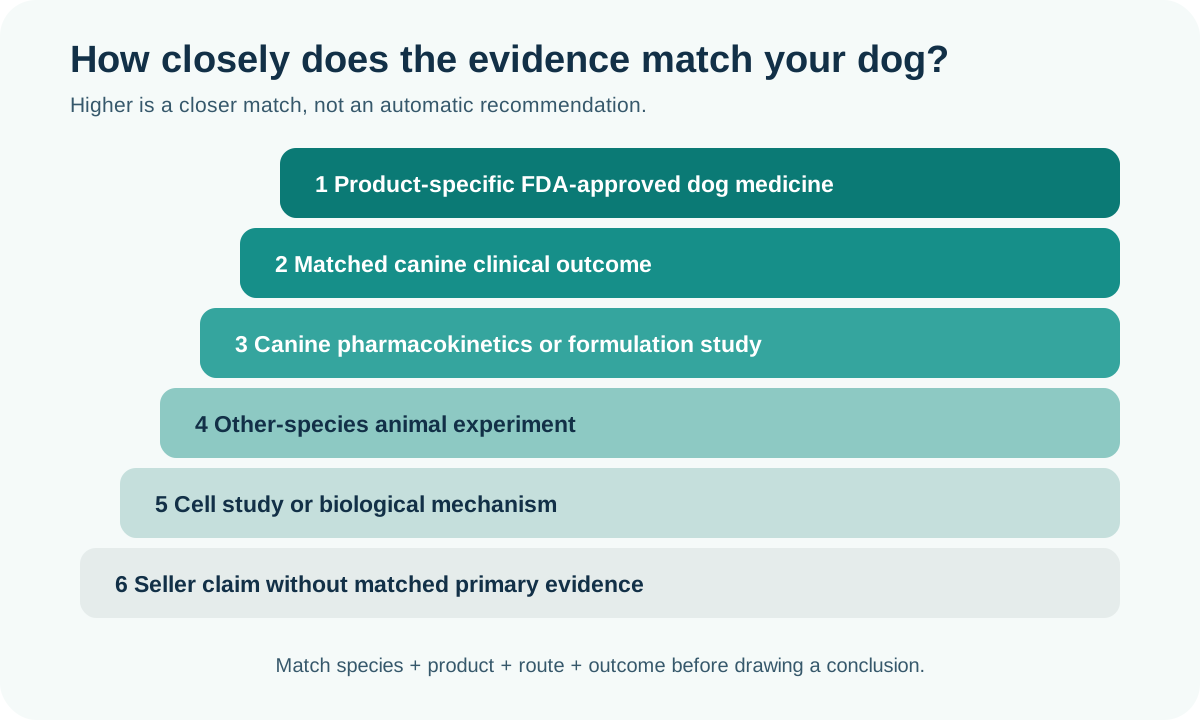
The table below gives a practical answer to the search phrase “best peptides for dogs” without turning an evidence gap into a recommendation. The highest category is not a shopping winner. It means the question is more clearly defined and the evidence is closer to an actual dog-care decision.
| Category | What dog evidence can establish | What remains unresolved | Responsible next step |
|---|---|---|---|
| FDA-approved veterinary peptide or protein medicine for a diagnosed disease | Product-specific safety and effectiveness for the species, indication, route, and label reviewed by FDA. Insulin products approved for canine diabetes are a clear example. | Approval for one diagnosed disease does not make the medicine useful for general wellness, weight loss, injury recovery, or another dog. | Use only within the veterinarian-directed care and monitoring plan for that diagnosis. |
| Oral collagen peptides with canine clinical research | A 2024 double-blind study evaluated one specific bioactive collagen peptide intervention in 31 dogs with naturally occurring osteoarthritis for 12 weeks. | The paper does not establish every powder, chew, collagen type, blend, serving, or claim. Funding and product matching still matter. | Compare the proposed product with the studied formulation, then use the dog collagen buying guide. |
| Compound studied in dogs for pharmacokinetics or formulation | Dog experiments can show absorption, blood exposure, metabolism, or another narrow endpoint. BPC-157 and oral semaglutide provide examples. | Exposure and absorption do not prove healing, pain relief, weight loss, diabetes control, or long-term clinical safety in pet dogs. | Translate the measured endpoint before applying the headline. Read the BPC-157 dog-study guide. |
| Cell, rodent, rabbit, or other early research | Early studies can explain a mechanism or justify a future research question. | They do not establish a clinical benefit, dose, product, or route for household dogs. | Keep the species and experimental model in every summary. Do not move the compound into a dog ranking. |
| Seller claim, testimonial, or research-chemical listing | It can show what is being marketed. | It does not verify identity, sterility, approval, effectiveness, or suitability for a dog. | Do not use it as clinical evidence or a purchase funnel. |
Why “best” starts with the dog, not the peptide name
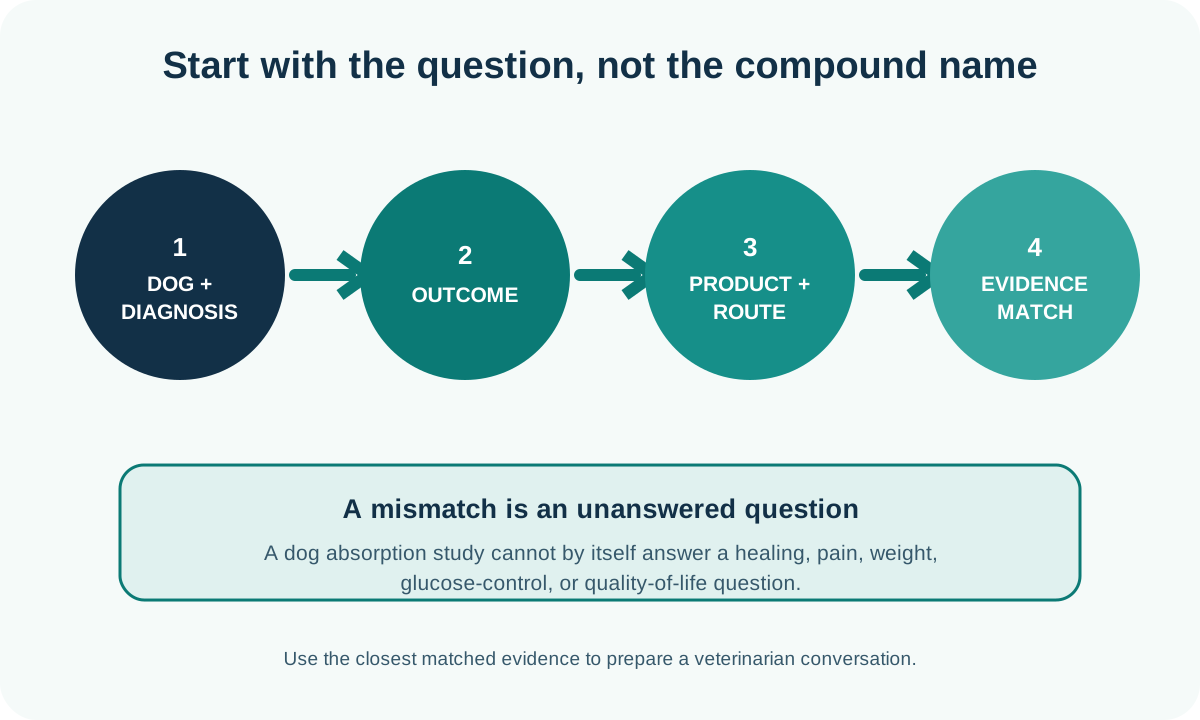
A senior dog with diagnosed osteoarthritis, a dog with diabetes, a young athlete recovering from an injury, and a dog with unexplained weight change do not have the same clinical question. A single ranked list hides those differences. Before comparing compounds, write one sentence: “For this dog, we want to know whether this exact option improves this exact outcome.”
The outcome should be something meaningful and observable. Examples include comfortable mobility, a veterinarian-defined glucose target, a specific skin finding, or recovery after a diagnosed injury. “Supports wellness” is usually too vague to evaluate. So are broad words such as repair, anti-aging, recovery, metabolism, and inflammation when they are not attached to a condition and measurement.
Next, identify the population. Healthy laboratory beagles can answer pharmacokinetic questions, but they may not represent client-owned dogs with naturally occurring disease. A rat injury model may help researchers test a hypothesis, but it cannot establish the same outcome in dogs. Human approval can explain a human product. It does not create a canine indication.
Finally, preserve the formulation and route. An oral collagen powder, a chew with several ingredients, an injected research preparation, and a veterinary prescription medicine are not interchangeable because all may contain amino-acid chains. Each needs its own label, evidence record, safety questions, and care pathway.
Watch: separate the label, the study, and your dog
Three evidence cards
This original 48-second captioned explainer shows why a product label, a research result, and your dog’s situation belong on separate cards. No audio, dose, or treatment instruction.
Which peptide category has the closest dog-specific evidence?
Among the consumer categories commonly found through a “best peptides for dogs” search, oral collagen peptides currently offer a useful example of direct canine clinical research. Dobenecker and colleagues reported a placebo-controlled, double-blind intervention in 31 dogs with naturally occurring osteoarthritis. The 12-week study compared a specific bioactive collagen peptide intervention with an omega-3 and vitamin E combination and used force-plate treadmill measurements, owner questionnaires, and accelerometers.
The authors reported improvements in several kinetic measures and the quality-of-life component they evaluated for the collagen peptide group, while accelerometry did not change. Those mixed endpoint details matter. A study does not become stronger when the unchanged measure is left out of a marketing summary.
The study also has product-specific and conflict-of-interest context. The intervention concerned specific bioactive collagen peptides. The paper reports that GELITA funded the study, one author was employed by the company, and another was a co-inventor on collagen-peptide patents. A disclosed relationship does not automatically invalidate the work. It does mean readers should keep the exact formulation, funding, sample size, comparison, endpoints, and need for replication visible.
This evidence does not show that every product labeled “collagen peptides” will perform the same way. A retail product may use another source, molecular profile, amount, format, blend, or schedule. It may cite ingredient research while selling a finished product that was never tested. Use the study to improve the matching question, not to give every collagen label a clinical badge.

What to match before choosing a collagen product
- Exact collagen identity: hydrolyzed collagen peptides, undenatured type II collagen, gelatin, and a multi-ingredient joint blend are not the same preparation.
- Finished product versus ingredient: ask whether the cited paper tested the exact retail product or only a supplied ingredient.
- Dog population: naturally occurring osteoarthritis is more relevant to a diagnosed dog than a cell experiment, but it still may not match your dog’s condition or care plan.
- Outcome: gait, owner-reported pain or quality of life, daily activity, imaging, and long-term disease progression are different measurements.
- Complete formula: flavors, allergens, calories, other active ingredients, and undisclosed blend amounts can change the comparison.
For current label questions, powder-versus-chew tradeoffs, a fictional daily-cost calculation, and a printable worksheet, use the Collagen Peptides for Dogs buying guide. There are no active affiliate links on that page, and a lower daily cost is not treated as evidence of a better product.
What about insulin and other prescription peptide medicines?
Insulin shows why “best peptide” must stay diagnosis-specific. Insulin is a peptide hormone used as a prescription medicine. FDA states that Vetsulin, a porcine insulin zinc suspension, is approved for use in dogs with diabetes. The agency also announced ProZinc as another approved insulin option for dogs and encouraged veterinarians to use FDA-approved animal insulin products when appropriate.
That is stronger product-specific regulatory evidence than a research-chemical listing, but it does not make insulin a wellness supplement, weight-loss tool, or choice for a dog without diagnosed diabetes. Diabetes management requires veterinary diagnosis, product-specific instructions, monitoring, feeding coordination, and recognition of urgent risks. This guide does not reproduce administration instructions or suggest that one approved insulin is best for every diabetic dog.
The example is valuable because it separates three ideas that online lists often merge:
- A molecule can be a peptide or protein medicine.
- A specific veterinary product can have an approved canine indication.
- That approval applies to the product, species, route, and diagnosed condition on the label, not to the entire peptide category.
When a veterinarian proposes a prescription medicine, ask for the exact product name, approval or lawful-use context, expected outcome, monitoring plan, common problems to watch for, and alternatives. Do not replace that discussion with a “top peptides” list.
Is BPC-157 one of the best peptides for dogs?
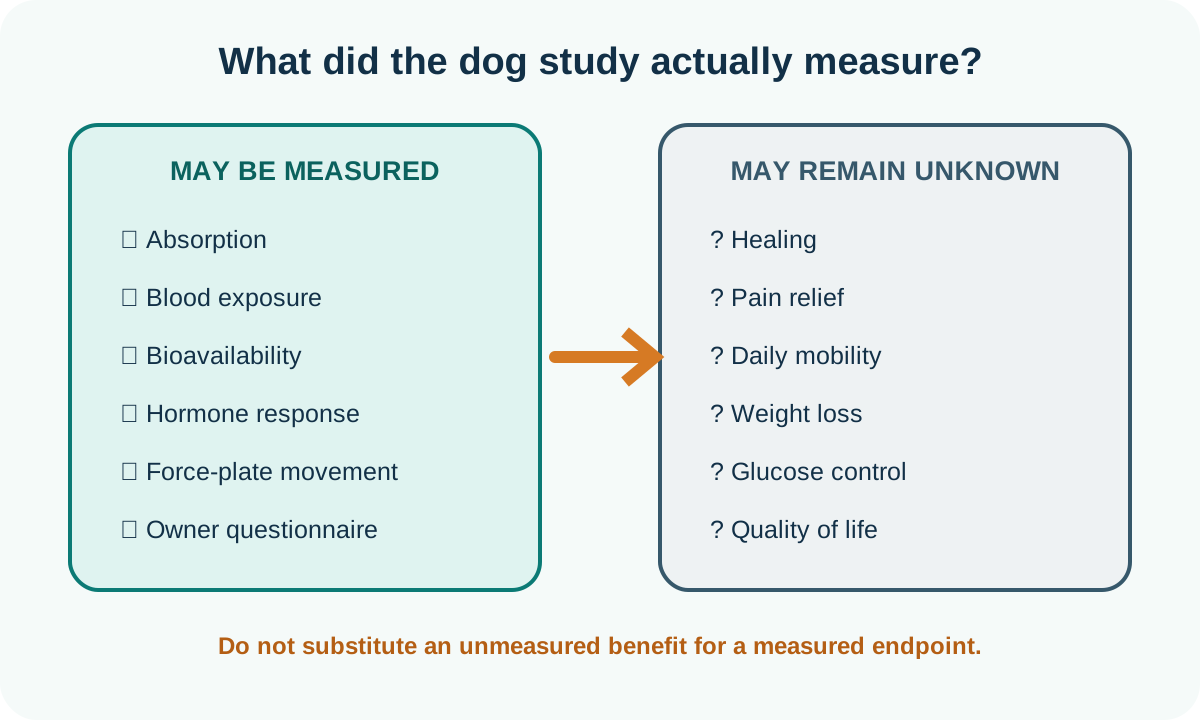
The available dog study often used in BPC-157 marketing does not establish a healing benefit. He and colleagues studied pharmacokinetics in six beagles, three male and three female, across intravenous and intramuscular research cycles. The paper measured blood concentrations, exposure, elimination, and bioavailability. It did not test whether an injured pet healed faster, moved more comfortably, or returned to activity sooner.
This distinction is easy to lose because the study genuinely involved dogs. “Studied in dogs” is accurate but incomplete. The useful sentence is: “BPC-157 was studied in six beagles to describe pharmacokinetics after laboratory administration.” That statement does not rank it beside a clinically tested canine intervention.
Rat wound and ulcer models can help explain why researchers are interested in the compound. They do not supply a canine protocol or validate a retail vial. A seller’s purity certificate, even if authentic and lot-matched, can address only the attribute and sample actually tested. It is not a clinical outcome study, a sterility guarantee beyond its scope, or FDA approval.
Read the full BPC-157 evidence guide for the six-dog pharmacokinetic design, the separate rat-ulcer paper, an explanation of Cmax, Tmax and AUC, and current compounding context. That page deliberately omits experimental doses as pet instructions.
Are semaglutide or tirzepatide the best peptides for dog weight loss?
Human GLP-1 headlines do not establish canine weight-management care. The 2018 Buckley paper on oral semaglutide included preclinical dog work, but its central question was how a tablet coformulated with the absorption enhancer SNAC crossed the stomach lining. It was formulation and absorption research, not a weight-loss or diabetes-treatment trial in client-owned dogs.
Tirzepatide adds another identity issue. It is a different compound with its own human labels and trials. A human result for semaglutide or tirzepatide cannot be copied into a dog benefit statement. Nor can research about exenatide in healthy purpose-bred cats establish a dog outcome for another medicine.
Weight change in a dog can be a symptom, a nutritional issue, a medication effect, a mobility problem, or part of another diagnosis. Begin with the animal’s examination and clinical question. Then ask which veterinary options have relevant evidence and monitoring. Do not use a human dosing schedule, convert a human amount by body weight, or obtain an unidentified research product because a headline uses the word peptide.
Watch: the missing species in a weight-loss headline
This original 48-second captioned video shows why a dog absorption experiment, a feline study of another medicine, and a human label answer different questions.
Open the watch page and transcript, then compare the semaglutide and tirzepatide guides.
How should TB-500, GHK-Cu, KPV, CJC-1295, and ipamorelin be ranked?
They should not be placed in a dog-treatment ranking without matched canine clinical outcomes. Each name has a different identity, route, research history, and evidence gap.
TB-500 and thymosin beta-4
TB-500, the acetylated LKKTETQ fragment, and full-length thymosin beta-4 are not interchangeable names. Research on one identity does not automatically support a product using another. Laboratory and animal models can examine mechanisms or tissue outcomes, but this guide did not verify a matched clinical trial showing that a retail TB-500 product improves recovery in client-owned dogs. Use the TB-500 identity guide to keep the fragment and full-length molecule separate.
GHK-Cu
GHK-Cu discussions often blend an exact copper peptide with multi-peptide copper complexes and finished topical products. The route and vehicle can change what reaches tissue. Rat chamber research, a topical rabbit study, and historically cited dog wound work do not become one product-level recommendation. The GHK-Cu formulation checklist shows how to match the compound, vehicle, wound model, species, and endpoint.
KPV
KPV research commonly cited for gastrointestinal or inflammatory claims includes human cell signaling and induced mouse models. Those studies can support a mechanistic question. They do not establish that a KPV product treats naturally occurring gastrointestinal disease in dogs. The KPV guide compares the models and measured outcomes without converting them into a dose or canine indication.
CJC-1295, ipamorelin, sermorelin, hexarelin, and GHRPs
Growth-hormone secretagogues and related analogs are separate compounds, not one interchangeable performance category. CJC-1295 with DAC and without DAC must be identified separately. GHRP-2 and GHRP-6 have different evidence records. A hormone response in healthy laboratory dogs is not proof of stronger muscles, faster recovery, longer life, or safe long-term use in a household dog. Start with the exact compound and population in the CJC-1295, ipamorelin, hexarelin, GHRP-2, and GHRP-6 guides.
The same rule applies to MOTS-c, thymosin alpha-1, SS-31 or elamipretide, epitalon, retatrutide, PT-141 or bremelanotide, Selank, Semax, IGF-1 LR3, and AOD-9604. A biological rationale or human research program is not a canine outcome. NAD+ is a related coenzyme, not a peptide, and should not be inserted into a peptide ranking as if the category were exact.
What makes a dog study clinically useful?
A useful canine paper should let you identify the dogs, the condition, the exact intervention, the comparison group, the route, the outcomes, the time frame, and unwanted events. It should also show how many dogs entered, completed, and were analyzed. Blinding, randomization, predefined outcomes, and transparent conflicts help readers judge the result.
Even a well-designed dog study may not answer your question if the formulation differs. A supplied research ingredient can be more precisely defined than a retail blend. A study of purpose-bred beagles may not represent dogs with naturally occurring disease. A short study may not settle long-term safety. One positive measure may appear beside an unchanged measure.
Use these five sentences when reading:
- The exact substance and formulation were ___.
- The dogs were ___ and had ___.
- The route and comparison were ___.
- The researchers measured ___ for ___ amount of time.
- For my dog, the unanswered question is ___.
If the source does not supply a blank, mark it unknown. Do not fill it from a retailer page, another study, or a different compound.

How to compare a powder, chew, prescription medicine, or compounded product
Begin by putting each option in the correct category. A nutritional powder may have a label serving and ingredient list. A chew may add flavors, calories, or a proprietary blend. An FDA-approved veterinary medicine has product-specific labeling. A compounded preparation is created for a prescription need and is not FDA-approved. A research-chemical listing is not a veterinary care pathway.
FDA explains that animal drugs compounded from bulk drug substances do not undergo FDA premarket review, so the agency has not determined them to be safe and effective for their intended uses. FDA also recognizes limited circumstances in which a compounded option may be medically appropriate under veterinarian and pharmacy oversight. Those statements should stay together. “Compounded” does not mean FDA approved, and “unapproved” does not tell an owner to make a treatment decision without the veterinarian.
For each real option, record:
- Exact product name, manufacturer, size, lot, and current label date.
- Intended species, indication or product purpose, and route.
- Every active and inactive ingredient, including individual amounts when disclosed.
- Whether the cited research tested the finished product, the same ingredient, or only a related mechanism.
- Current regulatory or prescription context, without treating a pharmacy listing as approval.
- Storage, handling, monitoring, and follow-up questions for the veterinarian or pharmacist.
- First-order and recurring cost only after suitability and comparability are established.
Watch: read amount, concentration, and volume as different numbers
Three numbers on a peptide label
This original 64-second captioned explainer separates ingredient amount, concentration, and liquid volume. It does not choose a dose, product, route, or mixing method.
Open the video page and transcript. The amount-to-volume calculator only uses an amount supplied by a veterinarian and a confirmed pharmacy-label concentration.
How to compare cost without choosing a treatment
Cost comparison belongs after the veterinarian has established that the options are appropriate enough to compare. A bottle price alone does not show how long the package lasts. Use the confirmed schedule and package quantity to calculate days per container, then divide the total allocated cost by those days.
Keep first-order and refill prices separate. Record shipping, tax, subscription terms, and expected waste. A lower daily cost does not prove that formulas are equivalent or that either one works. An injection also may involve visits, administration, laboratory monitoring, or follow-up that an online vial price does not show.
Use the two-product daily-cost calculator only for comparable options with confirmed schedules. It starts blank and stores no product or pet inputs. For collagen, the dog collagen calculator and worksheet keep the label, evidence, and price questions together.
Seven questions to ask a veterinarian
- What diagnosis or problem are we actually addressing? Ask what examination or testing should come before a product discussion.
- What outcome would count as improvement? Define a meaningful measure and a reassessment date.
- Does the evidence match dogs with this condition? Separate healthy-dog pharmacokinetics from clinical outcomes.
- Does it match this exact formulation and route? Do not substitute a fragment, analog, blend, tablet, implant, or injection.
- What is the approval or lawful-use context? Ask about the named product, not the category.
- What are the alternatives and monitoring needs? Include established veterinary care rather than comparing only trending compounds.
- What should prompt us to stop and call? Get product-specific instructions from the treating professional.
Open the free vet-visit checklist
Frequently asked questions
What are the best peptides for dogs?
There is no universal best peptide. For a diagnosed condition, the strongest option is a product and care plan supported for that species and indication. Among commonly marketed supplements, specific oral collagen peptide research provides a closer canine clinical match than research-chemical claims, but it does not validate every collagen product.
What is the best peptide for an older dog?
Age alone does not identify a treatment. An older dog may have joint disease, endocrine disease, dental pain, heart disease, kidney disease, neurologic changes, medication effects, or no disease at all. Start with the symptoms and diagnosis. Do not use an anti-aging claim as a substitute for an examination.
Is BPC-157 proven to heal injuries in dogs?
The six-beagle paper reviewed here measured pharmacokinetics, not healing or recovery. Rat injury and ulcer models do not establish a canine treatment outcome. This guide did not verify a product-level canine clinical trial supporting a retail BPC-157 healing claim.
Can dogs use semaglutide or tirzepatide for weight loss?
Human labels and trials do not create canine instructions. The dog semaglutide research discussed here addressed absorption of a specific oral formulation, not weight-loss treatment in pet dogs. Weight change should be evaluated by a veterinarian before a medicine is considered.
Are collagen peptides safe for every dog?
No product is automatically appropriate for every dog. The complete formula, source, allergens, calories, other ingredients, medical history, current diet, medicines, and intended outcome matter. Match the retail product to the evidence and discuss it with a veterinarian.
Does FDA approval of one peptide medicine mean peptides are approved for dogs?
No. Approval is product-, species-, route-, and indication-specific. An approved insulin for canine diabetes does not establish another peptide for wellness, injury recovery, weight loss, or a different disease.
Does a dog study make a compound safe for my dog?
No. Check the population, sample size, formulation, route, duration, endpoint, and adverse-event reporting. A pharmacokinetic or short preclinical study cannot settle long-term clinical safety for a different product or patient.
Can the peptide calculator choose an amount for my dog?
No. It performs unit arithmetic from a veterinarian-provided amount and a confirmed pharmacy-label concentration. It does not choose a compound, dose, frequency, route, formulation, or syringe setting.
Where should I start if a product page cites a study?
Open the original paper and write down the exact compound, species, population, route, comparison, endpoint, and duration. Then ask whether the finished product was tested. Use the evidence guide or manufacturer questions to organize the gaps.
The bottom line
The best peptide-related decision for a dog is the one that begins with a real clinical question and uses the closest product-specific evidence available. Approved veterinary peptide medicines belong to diagnosed, veterinarian-managed care. Specific collagen peptides have some direct canine clinical research, but retail products still need exact matching. BPC-157, semaglutide, TB-500, GHK-Cu, KPV, growth-hormone secretagogues, and other trending names should not be promoted as proven dog treatments when the source measures another species, mechanism, route, or endpoint.
Choose one unresolved question, collect the complete label and original source, and bring both to the veterinarian. A careful “not established” is more useful than a confident ranking built from mismatched studies.
This is a focused evidence comparison, not a systematic review, veterinary consultation, product test, or affiliate ranking. Pet Peptide Guide did not purchase or administer the products discussed. No active affiliate links appear on this page. Sources and current regulatory context were checked September 24, 2026.
Sources and scope
This is an introductory guide or original comparison framework, not a systematic review or a product recommendation.
- Dobenecker et al. (2024): specific collagen peptides in dogs with osteoarthritis — Thirty-one dogs, 12 weeks, placebo-controlled and double-blind; mixed endpoints and disclosed commercial interests are described in the guide.
- He et al. (2022): BPC-157 pharmacokinetics in beagle dogs and rats — Dog exposure and bioavailability research, not a canine healing or recovery trial.
- Buckley et al. (2018): oral semaglutide absorption with SNAC — Includes dog absorption research; it does not establish semaglutide weight-loss or diabetes outcomes in pet dogs.
- FDA: how animal drugs are reviewed and regulated — Product-specific US veterinary approval and unapproved-drug context.
- FDA: Vetsulin and ProZinc approved for diabetes in dogs — A concrete example of product-specific veterinary approval; not a universal product recommendation.
- FDA Guidance for Industry #256: compounding animal drugs from bulk drug substances — Current US federal enforcement-policy context for animal-drug compounding.
Source checked September 24, 2026. A general context source does not establish a named product’s benefit.